Cyclone Murasu Makes Landfall on South Andhra Coast Near Ongole
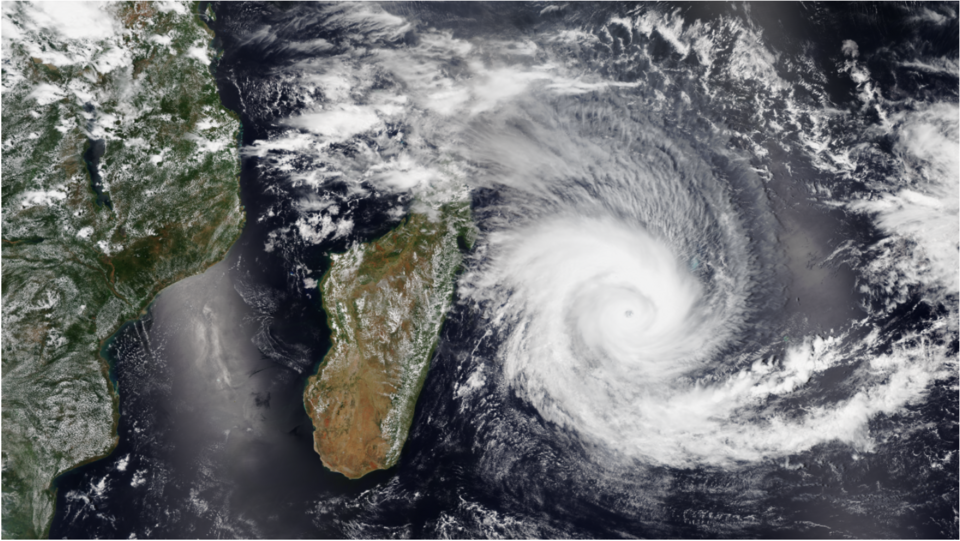
Severe Cyclonic Storm Murasu crossed the south Andhra Pradesh coast near Ongole, bringing sustained winds of 100 to 110 kmph with gusts up to 120 kmph. The name 'Murasu', meaning a traditional percussion drum in Tamil, was contributed by India under the WMO/ESCAP naming roster. This marks the second cyclonic storm to hit coastal Andhra Pradesh within a single week.
What happened
Severe Cyclonic Storm (SCS) Murasu developed over the Bay of Bengal during the post-monsoon and Northeast Monsoon season. The storm originated from a low-pressure area over the Andaman Sea on October 29, 2026, which intensified into a depression over the southwest and adjoining west-central Bay of Bengal on October 31. The system strengthened into a Cyclonic Storm on November 1 and was upgraded to a Severe Cyclonic Storm on November 2, 2026.
The landfall process commenced at approximately 01:00 IST on November 3, 2026. The storm crossed the south Andhra Pradesh coast between Nellore and Narsapur, making landfall close to Ongole in Prakasam district near Latitude 15.53°N and Longitude 80.22°E between 03:30 IST and 05:30 IST. Sustained surface wind speeds at the time of landfall ranged from 100 to 110 kmph, gusting up to 120 kmph.
Following landfall, Murasu tracked north-northwestwards at a speed of 6 to 7 kmph and began weakening into a Cyclonic Storm with sustained winds of 80 to 90 kmph gusting to 100 kmph by the afternoon of November 3, on a trajectory toward a deep depression. Murasu struck the coastal belt just days after Severe Cyclonic Storm Arnab made landfall on October 28, 2026.
The India Meteorological Department issued a 'Red Message' cyclone warning and post-landfall outlook for coastal Andhra Pradesh and northern coastal Tamil Nadu. Tracking was carried out using INSAT-3DR satellite imagery and Doppler Weather Radars positioned at Chennai, Machilipatnam, and Visakhapatnam. Emergency response was supported by 14 teams from the 10th Battalion of the National Disaster Response Force, comprising 11 teams in Andhra Pradesh and 3 teams in Tamil Nadu, coordinating with the Andhra Pradesh State Disaster Management Authority.
Important dates
| Low-pressure area formed over Andaman Sea | 29 October 2026 |
|---|---|
| Severe Cyclonic Storm Arnab made landfall | 28 October 2026 |
| System concentrated into a Depression | 31 October 2026 |
| System upgraded to Cyclonic Storm Murasu | 1 November 2026 |
| Intensified into Severe Cyclonic Storm | 2 November 2026 |
| Landfall completed near Ongole | 3 November 2026 |
📌 Static GK links
- Regional Specialised Meteorological Centre (RSMC) New Delhi, functioning under the India Meteorological Department (Ministry of Earth Sciences), monitors, tracks, and issues advisories for tropical cyclones in the North Indian Ocean basin, covering the Bay of Bengal and Arabian Sea.
- The WMO/ESCAP Panel on Tropical Cyclones (PTC) was established in 2000 to assign names to tropical cyclones in the northern Indian Ocean, officially beginning naming operations in September 2004.
- An expanded roster of 169 names contributed by 13 member nations of the WMO/ESCAP Panel was released in April 2020.
- According to IMD classification, a tropical disturbance is designated as a Severe Cyclonic Storm when sustained maximum surface wind speeds reach 48 to 63 knots (approximately 89 to 117 kmph).
What candidates should do
- Memorize the sequence of tropical cyclone names under the WMO/ESCAP 2020 list, noting contributing nations.
- Review IMD classification thresholds for tropical systems, from depression to super cyclonic storm.
- Track the geographical locations of key Doppler Weather Radars along India's eastern coastline.
- Understand the statutory role of the National Disaster Response Force (NDRF) and State Disaster Management Authorities (SDMA) in coastal disaster mitigation.
PrepZen analysis
Tropical cyclogenesis in the Bay of Bengal during the post-monsoon window (October to December) is a recurring focus area for competitive examinations like UPSC, State PSCs, SSC, and Banking. Questions frequently test candidate knowledge across physical geography, administrative mechanisms, and recent current affairs.
Aspirants should focus on three dimensions: the institutional framework (RSMC New Delhi, IMD under the Ministry of Earth Sciences, WMO/ESCAP PTC), geographic details (landfall coordinates, coastal districts such as Prakasam, Nellore, and Narsapur), and technical specifications (wind speed thresholds defining a Severe Cyclonic Storm). Questions often test the origin of cyclone names and the sequential order of storms in the regional roster.
Practice questions
Q1. Which country contributed the name 'Murasu' to the WMO/ESCAP tropical cyclone roster?
Q2. Severe Cyclonic Storm Murasu made landfall on the south Andhra Pradesh coast close to which location?
Q3. Which Regional Specialised Meteorological Centre (RSMC) is responsible for naming tropical cyclones in the North Indian Ocean basin?
It crossed south Andhra Pradesh coast near Ongole.
India proposed 'Murasu' name for this cyclone.
🎯 Key Point: Cyclone Murasu made landfall near Ongole, Andhra Pradesh.
FAQs
What is the meaning and linguistic origin of the name 'Murasu'?
The word 'Murasu' is of Tamil origin and refers to a traditional percussion drum or war drum. The name was submitted by India under the 2020 WMO/ESCAP naming list.
Where did Severe Cyclonic Storm Murasu make landfall?
It made landfall on the south Andhra Pradesh coast close to Ongole in Prakasam district, situated along the coastal stretch between Nellore and Narsapur.
Which cyclone preceded Murasu, and which system will follow it according to the roster?
Cyclone Murasu was preceded by Severe Cyclonic Storm Arnab (named by Bangladesh) and will sequentially be followed by Cyclone Akvan (a name proposed by Iran).
What maximum wind speeds were recorded at the landfall of Cyclone Murasu?
At the time of landfall, Murasu generated sustained surface wind speeds of 100 to 110 kmph, with gusts reaching up to 120 kmph, classifying it as a Severe Cyclonic Storm.
Sources and references
- imd.gov.in (mausam.imd.gov.in) Official
- ddnews.gov.in (ddnews.gov.in) Official
- newsonair.gov.in (newsonair.gov.in) Official
- imd.gov.in (mausam.imd.gov.in) Official
Prepared by PrepZen for exam preparation. Consult the linked sources for original announcements and current details. Corrections policy. Spotted an error? Write to prepzen.app@gmail.com.
Practice Quiz — 2 November 2026
Q1. Who did Dinesh V. Ganvir succeed as the 55th Director General of the Geological Survey of India (GSI)?
Q2. According to Worth a Journey's "World's 100 Best Museums 2026" list, what is the global and Asian ranking of the Bihar Museum?
Q3. The Nelakondapalli Buddhist Stupa, planned for international heritage development by the Telangana government, is located in which district?
Q4. On which date was the National Zoological Park (NZP) formally inaugurated?
Q5. What is the scientific name of the Orange Oakleaf, recently declared as Chhattisgarh's first State Butterfly?

A LITTLE PRACTICE. EVERY DAY.
Turn your reading into practice.
Daily current affairs, quizzes, vocabulary and a mistake bank — together in PrepZen.
Free Android app · Learn at your own pace
Good notes. One tap away.
Find study reels, PDF keywords and current affairs updates from PrepZen.